The Memory Revolution Powering Artificial Intelligence
An exploration of the transition in AI from data centers to personal devices, driven by advancements in memory technology and chip design.

Jun 1, 2026
Jun 1, 2026
•4 mins read
In May 2026, something subtle but significant happened in the tech world. Three companies, Samsung, Micron, and SK Hynix, quietly reached a trillion-dollar valuation. These companies don’t create apps or everyday consumer hardware; they produce a specific type of memory chip indispensable for AI, which has now become an insatiable market.
The real shift became apparent days later in Taipei. Nvidia’s CEO linked these chip makers with the colossal investments in data centers and the familiar laptops we use daily.
If you want to understand the future, start with memory, not processors. AI conversations typically focus on GPUs, like Nvidia’s costly H100. But without adequate memory support, these chips are ineffective. The issue is known as the memory wall, where standard memory fails to keep pace, causing GPUs to idle.
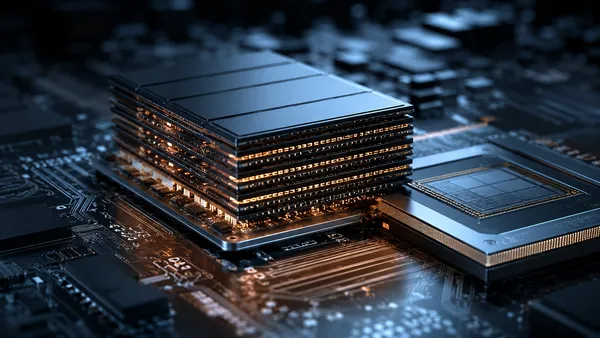
The solution? High Bandwidth Memory (HBM). Unlike traditional RAM, HBM consists of vertically stacked chips near the GPU, enabling data to move 25 times faster. This technology is essential for large AI models like ChatGPT to function.
Consequently, massive investments have poured into these chip manufacturers. In 2026 alone, major tech companies allocated approximately $725 billion for AI data centers, all requiring specialized HBM chips. Demand has outstripped the production capacity of these memory giants, transforming what was once a volatile market into the backbone of modern computing.
But the narrative took a fascinating turn on June 1, 2026, when Nvidia announced the RTX Spark, a chip that's more than a GPU. It's the complete brain of a computer.
Historically, Intel and AMD provided the main chips for laptops and desktops, while Nvidia focused on graphics cards. The RTX Spark changes this. It integrates a CPU, next-gen GPU, and unified memory onto a single chip, resembling Apple's M-series approach.
This integration allows for shared memory between CPU and GPU, speeding up processes significantly. AI models, traditionally requiring cloud computing, can now run directly on a personal computer.
What does this mean practically? It enables AI assistants to function locally on your laptop, enhancing privacy and offline usability. Tasks from searches to video editing can happen directly on your device, without needing remote servers.
Expect devices with the RTX Spark in late 2026, starting with high-end laptops. Tech giants like Adobe and Microsoft are already updating their applications to leverage these innovations.
Challenges remain, such as software compatibility with Arm-based Windows systems and initial high prices. The same memory chip shortage augmenting Samsung, Micron, and SK Hynix’s worth might also hinder rapid adoption.
Nevertheless, the path forward is evident. This cycle, originating from data centers with extensive budgets and innovative chip designs, is set to revolutionize personal computing. We’re transitioning from cloud AI to potent desk-side capabilities.
Technological transitions can seem gradual until the right elements align, making the change feel inevitable. The AI chip revolution is not just contained within data centers; it’s making its way into our everyday devices. Soon, our concept of computing, and what constitutes a ‘computer’, will transform completely.
Similar Articles
technology
The Memory Revolution Powering Artificial Intelligence
An exploration of the transition in AI from data centers to personal devices, driven by advancements in memory technology and chip design.

ai
AI Agents: Separating Hype from Reality
Examining the limitations and overhyped expectations of AI agents and expensive LLM calls.
