The Colorful Psychology Behind M&Ms
Exploring the role of color in M&Ms branding and consumer perception.

May 21, 2026
May 21, 2026
•3 mins read
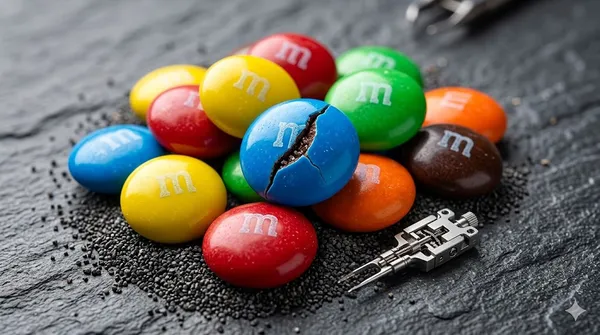
M&Ms aren't just chocolates wrapped in a thin, sugary shell. The brand thrives on color, whether it's the candies, the mascots, or even the internet debates about which color reigns supreme. You might think this is superficial, but pour a bag in front of friends, and suddenly everyone has a favorite. Opinions about these colorful dots emerge almost instinctively.
This made me curious: why these specific colors and ratios? Does Mars, the company that produces M&Ms, have a stake in how these colors populate your handful? The answers are more intriguing than expected.
Consider the packaging. M&Ms feature blue, brown, green, orange, red, and yellow, each with its distinct mascot. That's strategic. Kids and adults alike remember these characters. It's an age-old branding tactic: colors gain meaning when animated and named, turning ads into color-coded personality plays.
What about candy distribution? Online, you’ll find "facts" about specific color ratios, like 24% blue or 16% green. People imagine Mars employs a precise algorithm. But in practice, those ratios vary. Open a few bags, and you'll see: some are orange-heavy, others dominated by red or yellow. The real distribution is more variable than internet lore suggests.
Why doesn’t Mars strive for perfect ratios? They certainly could. Manufacturing precision isn't an issue. But randomness often feels more authentic than uniformity. If every bag mirrored the picture exactly, it would feel artificial. A bit of unpredictability makes it seem natural and unmanufactured.
Colors carry significance too. People project qualities onto them. Green M&Ms have tales of being "lucky" or "sexy." While mostly arbitrary, some associations are genuine: color psychology affects perception. Red can invoke energy; blue suggests reliability; brown, the understated one, matches chocolate itself, quiet but essential.
Mars subtly leverages this. They'll occasionally introduce new colors or facilitate "vote out your least favorite" events. These campaigns offer an illusion of influence. People rush to save favorites, sparking discussions, all while the candies remain unchanged in essence.
The truth is, M&Ms use color to manipulate perceptions without altering taste. Most won’t realize this subtle branding magic. Mars has honed these tricks over decades because they work.
Next time you dive into a bag, notice which color you reach for first. Ponder the reason, it likely has more to do with ingrained marketing cues than flavor. This isn't just candy; it's psychology at play, one vibrant piece at a time.